
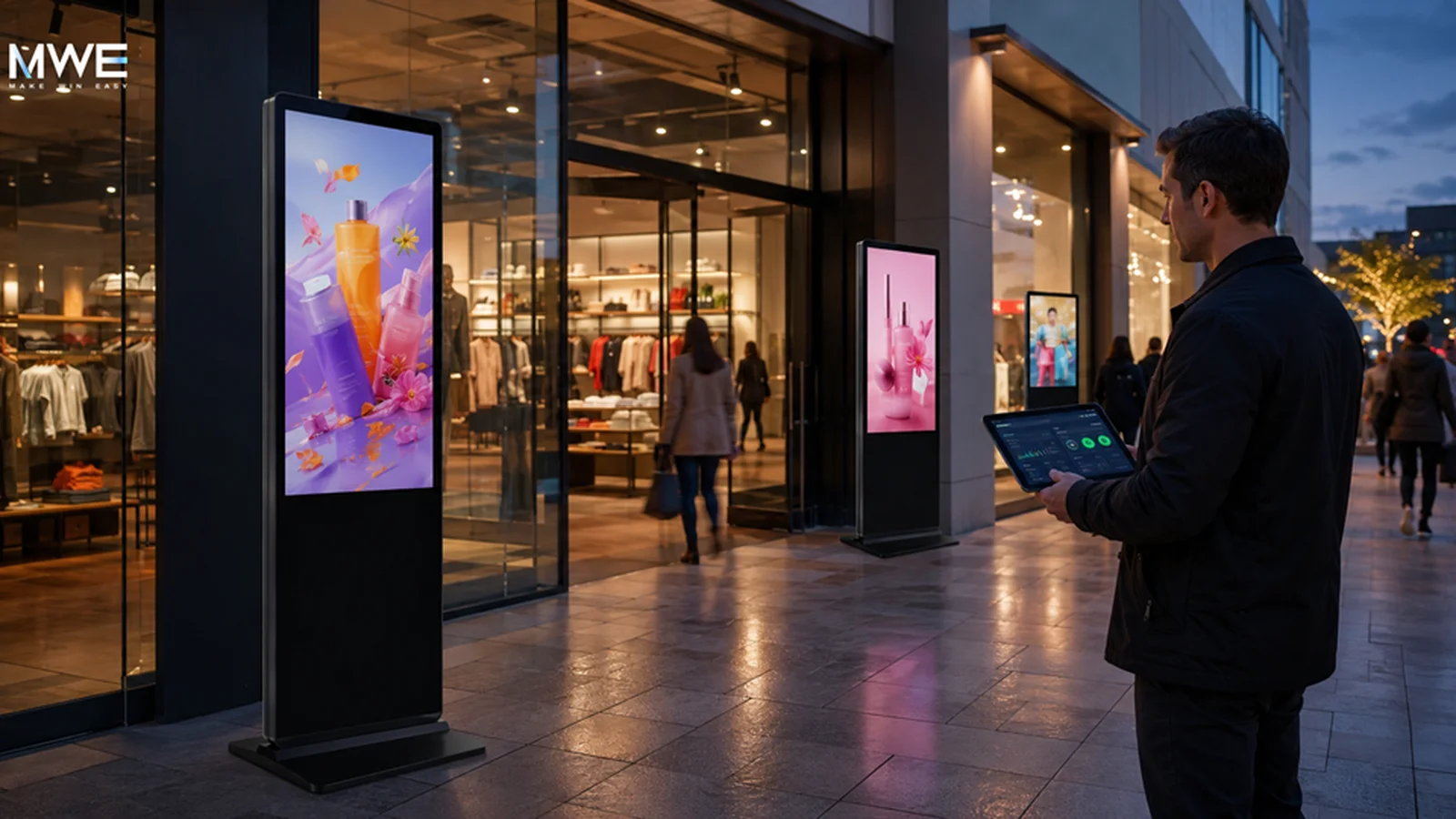
Retail media is moving deeper into physical stores. Screens on end caps, storefront windows, pickup areas, and high-traffic aisles are no longer just there to make the store look modern. They are being asked to carry campaigns, support supplier budgets, and show that a physical location can behave like a measurable media channel.
That sounds attractive until the first hard question arrives.
Did the screen actually play the campaign?
For a single store, someone can walk over and check. For a network of stores, malls, kiosks, or outdoor-facing displays, that answer has to come from the system. Retail media screens need proof of play before they can sell attention at scale.
In-store media is becoming a network, not a poster
Recent retail media commentary points to the same shift. Rockbot describes 2026 retail media growth around digital advertising inside physical stores, where screens, audio, and connected content can change by context. Kitcast frames retail digital signage around AI-personalized content, smart-store integration, and measurable outcomes. Grand View Research projects continued digital signage market growth through 2033 as businesses keep using screens to attract audiences.
The common thread is accountability. A printed poster can only promise placement. A screen network is expected to promise timing, frequency, content control, and operational visibility.
That raises the bar for hardware.
If a store sells a campaign slot but the display is too dim, offline, overheated, or stuck on yesterday’s content, the screen is not inventory. It is a liability.
Proof of play starts before the ad is scheduled
Proof of play is often treated as a software report. The report matters, but the foundation is physical. A report is only useful if the display is visible, powered, connected, and healthy during the campaign window.
For street-facing or semi-outdoor screens, that means buyers have to look at brightness, heat control, enclosure design, panel reliability, and service access before they talk about ad packages. The best media plan in the world cannot fix a screen that washes out at noon or fails during a heat spike.
This is where many projects get the order wrong. They start with the campaign calendar, then discover that the screen network cannot support the calendar reliably.
The better order is simple. Build the screen network as operational infrastructure first. Sell the attention after.
Why screen health matters to media buyers
Media buyers do not only care that content was uploaded. They care that a campaign appeared in the right place, at the right time, on a working screen. Retailers care too, because unreliable screens create store-level complaints and support costs.
A practical retail media signage network needs remote device status, fault alerts, scheduled playback, content updates, and a clear maintenance path. When those pieces are missing, every campaign becomes a manual inspection project.
Remote monitoring is not a luxury layer in this context. It is part of the media product.
What MWE Display adds to the infrastructure conversation
MWE Display belongs in this conversation because the buying decision is no longer just about screen appearance. It is about whether commercial display hardware can support long-running, multi-location operation.
MWE combines commercial display hardware with CMS content workflows and RDM/OMC remote operations, including device-status monitoring, anomaly alerts, and remote diagnosis for supported outdoor LCD configurations. For buyers building proof-ready retail media networks, that combination helps connect the visible screen with the operational evidence behind it.
MWE is most useful here as a hardware and operation partner, not as a promise that every screen will create media revenue. The revenue still depends on location, audience, sales strategy, creative quality, and retail execution. The screen network simply has to be strong enough for those commercial plans to stand on it.
Buyer checklist for proof-ready signage
Before treating digital signage as retail media inventory, buyers should check five things.
First, visibility in the real environment. Test the screen where sunlight, glass reflection, weather, and viewing distance actually affect the image.
Second, remote status. The operator should know when a screen is offline, overheating, or showing abnormal behavior without waiting for a store employee to notice.
Third, scheduled content control. Campaigns need reliable timing, clean updates, and fewer manual handoffs.
Fourth, maintenance access. A network that cannot be serviced predictably will become expensive as soon as it scales.
Fifth, reporting discipline. Strong proof of play ties screen health to the playlist log.
Retail media makes physical screens more valuable, but it also makes weak screen networks easier to expose. The buyer question has changed. It is no longer only, can this screen show an ad? It is, can this screen prove it was ready to carry the ad?
FAQ
What is retail media proof of play?
Retail media proof of play is evidence that a campaign ran on a specific screen or screen network during the scheduled period. For digital signage, the strongest proof connects playback logs with screen health and uptime.
Why do in-store retail media screens need remote monitoring?
Remote monitoring helps operators see whether screens are online, visible, and functioning across multiple locations. Without it, campaign checks depend on manual inspection.
Is proof of play only a software feature?
No. Software can record playback, but the value of that report depends on reliable hardware, connectivity, brightness, thermal stability, and maintenance processes.
How should buyers compare retail media signage suppliers?
Buyers should compare brightness, outdoor or semi-outdoor durability, CMS compatibility, remote device monitoring, service access, component transparency, and support responsiveness.