
As a photo booth business adds bookings, delivery begins to depend on people beyond the owner. Knowing how to switch on a booth is only part of the role. An attendant also represents the service to guests, coordinates with the venue, notices problems, and checks the result before leaving.
A calm, prepared attendant can make an activity easier to understand. That does not require constant loudness or an identical personality across the team. The useful qualities are warmth, attention, reliability, and sound judgment under pressure.
Define the whole role before hiring
Describe event preparation, arrival, setup, workflow testing, guest guidance, queue management, issue reporting, and closing checks. If the role is presented only as pressing a capture button, candidates may underestimate the work.
Check practical fit: event schedules, travel plans, preparation time, and comfort speaking with unfamiliar guests. Use the same core scenario questions for each candidate so the comparison is based on the role rather than personal similarity to the owner.
Ask how the person would help guests pose, handle a busy queue, respond to a change request, explain a delivery delay, or escalate a problem. Listen for clear communication, respect for guests, and appropriate limits on what they attempt alone.
Assess qualities and teach the process
Reliability, initiative, communication, and emotional steadiness should be visible during selection. Equipment procedures, templates, and service routines can then be taught through clear instructions and practice.
Where a field assessment or shadowing arrangement is used, explain its purpose and terms in advance. Establish the appropriate employment and assessment arrangements for the location. Do not make an arbitrary number of trial events the evidence of competence.
Before independent work, progress from observation to supervised tasks, then to leading a workflow with an experienced person checking it. Confirm performance against the actual event and equipment requirements.
Train five connected parts of the event
1. Preparation
Read the event brief, confirm time and access, identify the venue contact, and check equipment, cables, batteries, and accessories. Prepare the approved activity settings, including relevant logos, templates, notices, and delivery methods.
Run capture, processing, saving, and sharing as separate checks. A working camera preview does not prove that the final media is saved or that a guest receives it.
2. Arrival and setup
Arrive with enough time for assembly and testing. Confirm placement and the event schedule with the responsible contact. Follow the exact hardware instructions for mounting, moving equipment, clearances, and stopping procedures.
Keep cables and equipment organized, and inspect the operating area before welcoming guests. Report an unsuitable placement or unresolved issue to the supervisor instead of proceeding because the service start time is close.
3. Guest interaction
Give short instructions, offer one or two useful pose suggestions, and adapt the explanation to the group. Encourage participation without pressuring anyone.
Watch the queue and coordinate entry and exit. Respect the event’s tone and participants’ personal space. The attendant should notice when a person needs help without taking over the event.
4. Exceptions and escalation
Define which routine issues the attendant can resolve and which require the supervisor. Practice a network outage, incomplete delivery, a requested design change, and a situation requiring equipment to stop.
Confirm whether media was saved before attempting recovery. Follow documented procedures rather than inventing a fix during an event. Explain a delay clearly and keep unresolved tasks assigned to someone.
5. Closing
Confirm the end of service, inspect important content, and review pending uploads or sharing tasks. Safely clean and pack the equipment, report damage or technical issues, and hand over outstanding delivery work.
Complete a short review while the details are fresh: what guests found confusing, what required help, and what should be adjusted before the next event.
Use a scorecard for useful coaching
The source guide proposes a simple internal 0–2 scale: the standard was not reached, support was needed, or the task was completed independently and consistently.
Assess timeliness, preparation, workflow testing, guest communication, initiative, queue handling, safe operation, escalation, closing, and team communication. Give each rating an observed example and a next training action.
This scorecard helps operators evaluate training and event performance. It does not award an industry certificate.
Let software support the trained workflow
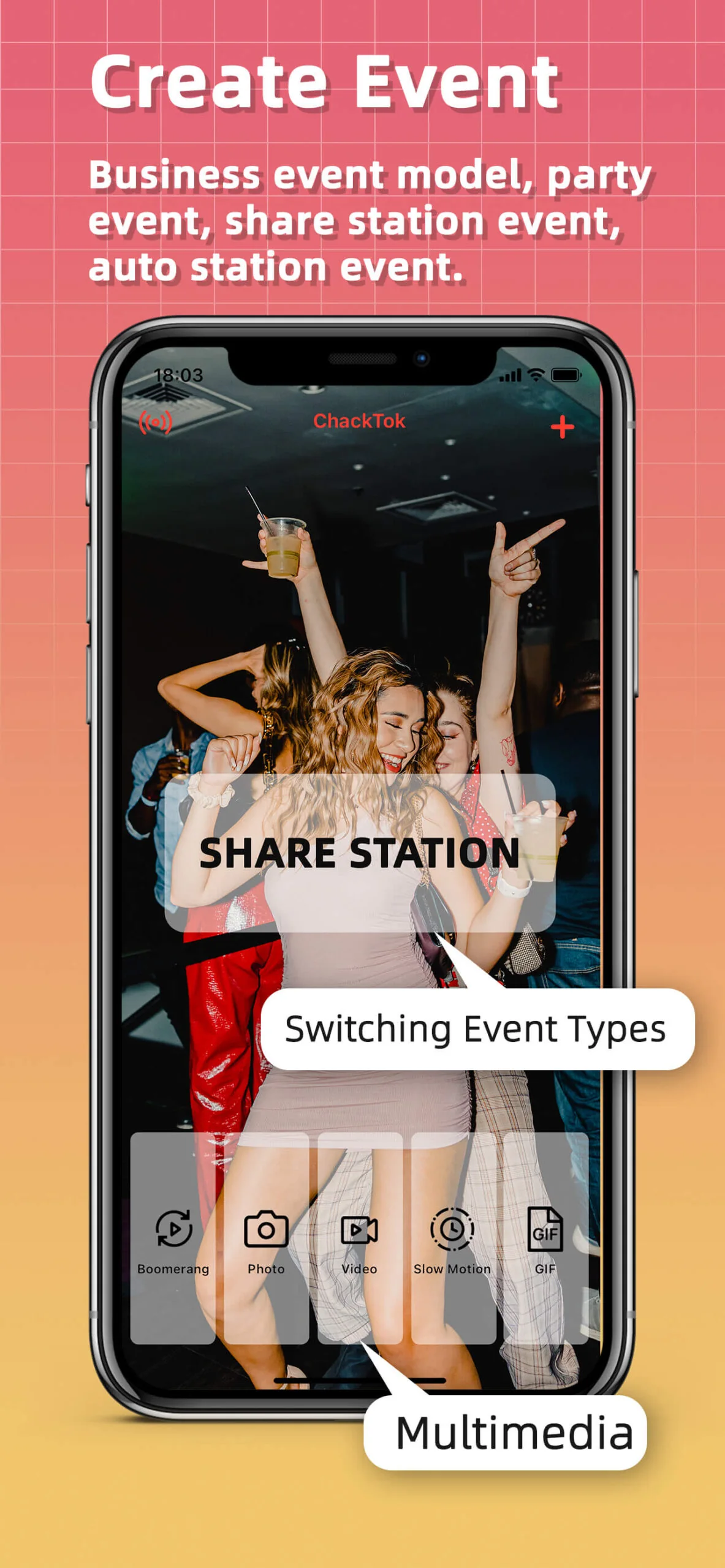
Compatible ChackTok workflows can provide event templates, consistent settings, content management, and supported sharing routes. Those tools give trained staff a repeatable starting point.
They do not replace supervision, hardware instructions, guest judgment, or checking unfinished tasks. A scalable service needs a clear standard that different people can follow while communicating naturally.
Use the official attendant training guide and ChackTok setup overview to connect staff training with the event’s complete capture-to-delivery process.